
Blog
2-Bay NAS vs 6-Slot NVMe NAS: Which Beelink Storage PC Fits You?

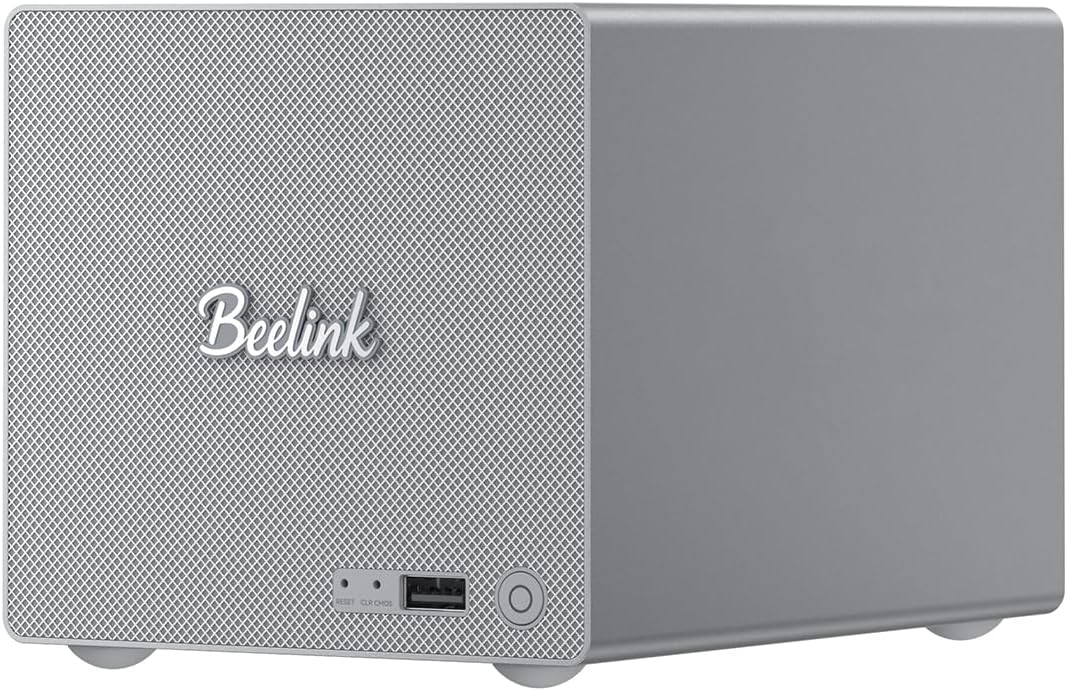
2-Bay NAS vs 6-Slot NVMe NAS: Which Beelink Storage PC Fits You? is a buyer-focused guide for shoppers comparing real products available from Hardware Computers. The goal is to match demand in the market with the exact product pages you can open, compare, and buy from the store.
Storage buyers often search by bay count and media type because the form factor decides capacity, speed, noise, and upgrade path.
This guide focuses on Beelink ME Pro 2-Bay, Beelink ME mini 6-slot Home Storage NAS Mini PC, and Beelink ME Pro 2-Bay AI NAS Mini PC Intel Wildcat Lake 304. It is written for families, creators, home labs, and small businesses comparing compact NAS layouts, with practical notes on what to compare before choosing a configuration.
Shop the Products Mentioned
- Beelink ME Pro 2-Bay – best for small-office storage and buyers who want a compact 2-bay NAS form factor.
View product - Beelink ME mini 6-slot Home Storage NAS Mini PC – best for home media, family storage, and compact flash-based NAS builds.
View product - Beelink ME Pro 2-Bay AI NAS Mini PC Intel Wildcat Lake 304 – best for storage buyers who want NAS capacity, fast networking, and light AI capability.
View product
Why This Category Has Demand
In 2026, PC buyers are being more selective. Memory and storage costs, Windows 11 refresh cycles, AI-capable hardware, GPU availability, compact desk setups, and creator workflows all affect what people search for. That makes buyer-intent content useful: a shopper may not start with a brand name, but they often start with a problem such as local AI, a small office desktop, a faster dock, a NAS for backups, or a gaming tower that is already built.
That is why the strongest product posts should do more than repeat specifications. They should explain who each product is for, what tradeoffs matter, and where the reader should click next. The products below are selected because they connect to categories with visible demand: AI PCs, mini PCs, GPUs, NAS storage, docking, compact workstations, and value refurbished desktops.
Products Worth Comparing
Beelink ME Pro 2-Bay
Beelink ME Pro 2-Bay is best for small-office storage and buyers who want a compact 2-bay NAS form factor. The listing highlights All-metal 2-bay NAS mini PC with interchangeable board concept, Intel N-series options, 5GbE, and 2.5GbE. For an affiliate-style comparison, the key question is not just whether the spec sheet looks strong, but whether the product fits the job the buyer repeats every week.
Beelink ME mini 6-slot Home Storage NAS Mini PC
Beelink ME mini 6-slot Home Storage NAS Mini PC is best for home media, family storage, and compact flash-based NAS builds. The listing highlights Six-slot home storage NAS mini PC with up to 24TB capacity across M.2 SSD slots and multi-OS support. For an affiliate-style comparison, the key question is not just whether the spec sheet looks strong, but whether the product fits the job the buyer repeats every week.
Beelink ME Pro 2-Bay AI NAS Mini PC Intel Wildcat Lake 304
Beelink ME Pro 2-Bay AI NAS Mini PC Intel Wildcat Lake 304 is best for storage buyers who want NAS capacity, fast networking, and light AI capability. The listing highlights Wildcat Lake 304 AI NAS mini PC with 24 TOPS AI performance, M.2 plus dual HDD storage, 10GbE, and 2.5GbE. For an affiliate-style comparison, the key question is not just whether the spec sheet looks strong, but whether the product fits the job the buyer repeats every week.
How to Choose Before You Click Buy
Start with the workload. Gaming, local inference, file storage, video editing, office productivity, and home media all stress hardware differently. A GPU-heavy buyer should focus on graphics memory and platform support. A mini PC buyer should focus on processor class, memory, storage, noise, ports, and display support. A NAS buyer should think about drive layout, networking, capacity, and backup habits.
Next, check the space and setup. Compact systems are attractive because they clean up a desk, but small computers still need airflow, practical cable routing, and the right monitor connections. Docks and storage companions are useful when the computer itself has limited expansion, while larger towers are better when the buyer expects more internal upgrade room.
Finally, use the product pages for current availability, configuration details, and pricing. Blog posts are best for narrowing the shortlist; product pages are where the live store information belongs. Open each linked product, compare the listed specs, and choose the model that solves the actual job rather than the one with the longest list of features.
Affiliate-Style Recommendation
If you are shopping for families, creators, home labs, and small businesses comparing compact NAS layouts, start with the linked Hardware Computers products in the list above. They give you a focused shortlist inside a demand-heavy category, and each product page has the current listing details needed to make the final decision.
For most buyers, the right move is to choose the product that matches the main workflow first, then optimize around nice-to-have features. Extra ports, more memory, faster storage, and higher-end graphics are valuable when you will use them. When you will not, a simpler system can be the smarter purchase.
Bottom Line
The products in this guide are worth comparing because they sit inside a market category people are actively shopping in 2026. Use the links above to view the Hardware Computers product pages, compare configurations, and decide which option fits your desk, workload, and budget.

